
Noble Fates Map Seeds: Reroll and What to Look For
How Noble Fates map seeds and the Resettle Step work, the terrain checklist for a good home map, and how to reroll without losing progress.
You do not need a magic seed number. 1.0 added the Resettle Step: when you arrive on a home map you can fly around, approve it, or refuse and pick a different biome. Judge the map on buildable flat land, water, trees, visible stone and distance to neighbours, then reroll before you place a single blueprint.
Search results for "Noble Fates map seeds" are mostly people asking for other people's numbers. That is the wrong tool. The game generates a whole world around your home map, and a seed that is perfect for a dwarven mountain fortress is terrible for a halfling farm.
How world generation works
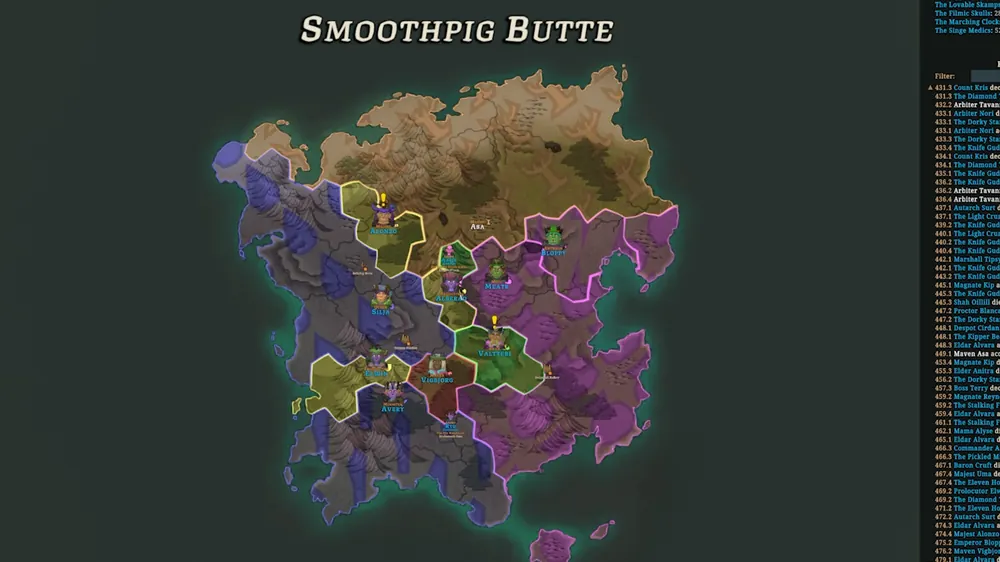
When you start a new kingdom, the game generates a world with regions, settlements and kingdoms, then drops you onto a home map inside it. The Resettle Step lets you inspect that map before committing.
If you refuse the map, you choose a biome and the game generates a new home map for that biome. This is the reroll. It is free, it happens before your kingdom exists, and it is the only reroll that does not cost you progress.
There is no in-game "enter seed" screen in the same way some colony sims have one. What players share as "seeds" are usually descriptions of world setups or saved starts, not a single number you can type in. Treat any seed list without patch context as outdated.
The home map checklist
Before you approve a map, fly the whole thing and score it on these five points.
1. Buildable flat land
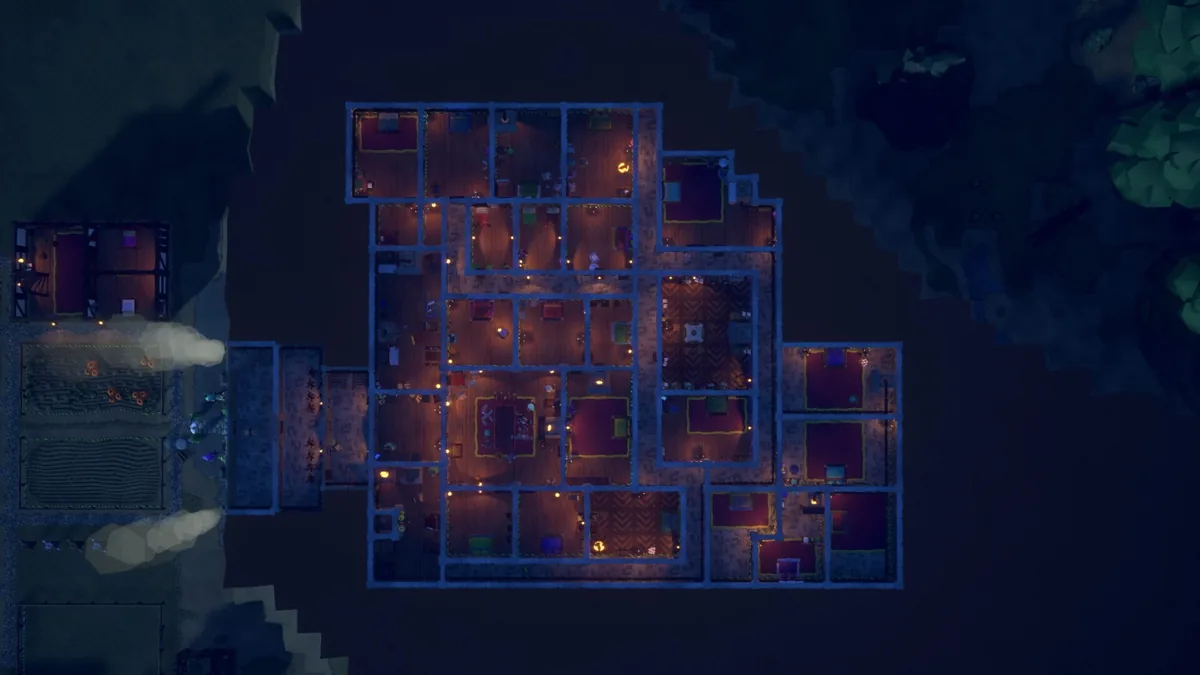
You need a contiguous flat or gently sloped area roughly 20 tiles across for the first settlement. It should be big enough for:
- beds and a dining hall
- a kitchen and food storage
- a workshop cluster
- a farm plot or two
- room to expand into a wall perimeter later
A map with beautiful cliffs and no flat ground is a trap. Terraforming exists, but it is slow and it consumes noble labor you do not have in week one.
2. Water you can reach but not flood with
You want a river, lake or pond within reasonable walking distance of the settlement.
- Water is needed for drinking, cooking and irrigation.
- Pumps and outlets water roughly a 9x9 region per pump-and-outlet pair, divided among outlets.
- Water inside your planned walls is a flooding risk. The 1.0 water rework reduced unintentional flooding, but damming still matters.
If the only water is at the bottom of a cliff, keep rerolling.
3. Trees and forageables
Trees are fuel, construction material and eventually farmable. Berries and forageables carry the first two days of food before farms produce.
A map with no trees means every plank is a trek. A map with no forage means your first winter is a gamble.
4. Visible stone and a hill to mine
Mining requires line of sight in 1.0, and caves are discovered rather than assumed. You want:
- exposed stone or a hillside you can cut into
- iron ore within reach of your settlement
- ideally a cave system for later magicite and deep metals
Dwarven starts should be picky here. A dwarven kingdom with no mountain is just a slow human kingdom. The iron guide→ covers prospecting in detail.
5. Neighbour distance
Open the world map and check who is near you.
- Too close: early raids before you have walls or guards.
- Too far: no trade, no diplomacy, no visitors.
- Ideal: one or two kingdoms within travel range, none on top of you.
A map that looks perfect but sits between two hostile kingdoms is not perfect.
Biome notes
| Biome | Good for | Watch out for |
|---|---|---|
| Temperate forest | First kingdoms, elves, halflings | Easy to underestimate winter |
| Mountains | Dwarves, stone building | Food and sunlight |
| Desert | Orcs, trade routes | Water and wood scarcity |
| Snow | Dwarves, isolated play | Growing season and heating |
| Riverlands | Farming, trade | Flooding and soft ground |
The Riverlands update added flowing water and mid-to-late game farming improvements, so river maps are stronger than they look if you can manage water.
Rerolling after you have started
You cannot move an established kingdom. The home map is permanent once you commit.
What you can do:
- Start a new kingdom with the same origin and a different biome. This is the honest reroll.
- Use the Resettle Step properly on every new game, even if you are experienced. Ten minutes of flying saves ten hours of regret.
- Use mods that change map generation or kingdom size limits if you want a specific kind of map. The mods guide→ lists the relevant ones.
Do not try to "fix" a bad map with terraforming in the first week. Terraforming is a mid-game tool for shaping a fortress, not a substitute for a buildable site.
A quick scoring routine
When the Resettle Step opens, do this in order:
- Fly to the map center and look for flat ground.
- Follow the flat ground to water.
- Check the tree line and forage density.
- Look for exposed rock and a hillside.
- Open the world map and check neighbours.
- If any of the first five fails badly, refuse and reroll.
Two minutes per map, five maps maximum. If five maps in a row fail, change biome. The generator is not the problem; the biome is.
Sources
Official source: Noble Fates on Steam ↗
- 1.0 patch notes ↗ for the Resettle Step, mining line of sight and the water rework.
- Steam Workshop ↗ for map and kingdom-size mods.
- Steam Community discussions ↗ for players sharing world setups.
FAQ
Can I enter a specific seed number?
The game does not expose a classic seed-entry field on the new-game screen. The Resettle Step and biome choice are the intended reroll tools. Community "seed" posts usually describe a world, not a code.
Does the map change after world generation?
The terrain does not change on its own, but you can terraform stone, copper, iron, silver and gold later. Water simulation also changes the map dynamically when you dam or drain it.
Is a river map better than a mountain map?
Neither is better in general. River maps are better for farming and trade; mountain maps are better for dwarves, stone and defence. Match the map to the race and principles you chose.