
Noble Fates Raids: Patrol Routes and Gate Houses
Defend a Noble Fates kingdom: why raids are no longer auto-detected, how patrol routes work, gate house design and the surrender choices that follow.
Since 1.0, raids are not detected automatically. Guards on patrol routes get a perception boost and reveal the raider path for about five minutes. Build one gate house on your main approach, staff two guard shifts, and decide in advance whether you will execute, exile or ransom the survivors.
Defence in Noble Fates is a scheduling problem before it is a combat problem. The wall matters, but the guard who is awake to see the raiders matters more.
What changed in 1.0
The old system detected raids at the map edge or near your home area. The new system does not.
- No auto-detection. Raiders can arrive without a warning banner.
- Patrol routes detect them. Guards on patrol get a perception boost.
- Five-minute reveal. Once detected, the raider path is shown for roughly five minutes.
- Guards earn combat skill. Patrol experience makes guards better at their best combat skill.
- Priority and rushing. Guards can be set to prioritise threats, rush to them, and stagger their schedule.
That last point is why the schedule guide→ matters for defence. A guard who is asleep cannot patrol, and a guard who patrols alone gets overwhelmed.
Patrol routes that actually cover your kingdom
A patrol route is a path a guard walks repeatedly.
Design principles:
- Cover the approaches, not the interior. Raiders come from outside. A patrol that circles the dining hall is a parade.
- Overlap routes. Two guards on overlapping routes cover each other's blind spots.
- Stagger schedules. Day guard 07:00 to 17:00, night guard 17:00 to 03:00, with an overlap at dusk.
- Keep routes short enough to complete. A route that takes two hours to walk means the guard is at the far end when the raid lands.
- Include the gate house. The guard at the gate is the first responder.
Practical route set:
| Route | Coverage | Guard |
|---|---|---|
| Outer ring | Perimeter wall and gate approach | Day guard |
| Outer ring (night) | Same, different hours | Night guard |
| Resource edge | Mine entrance and farm edge | Day guard, offset |
| Interior fallback | Courtyard and keep | Any off-duty guard |
Add routes as your perimeter grows. Do not leave a new wall section unpatrolled.
The gate house
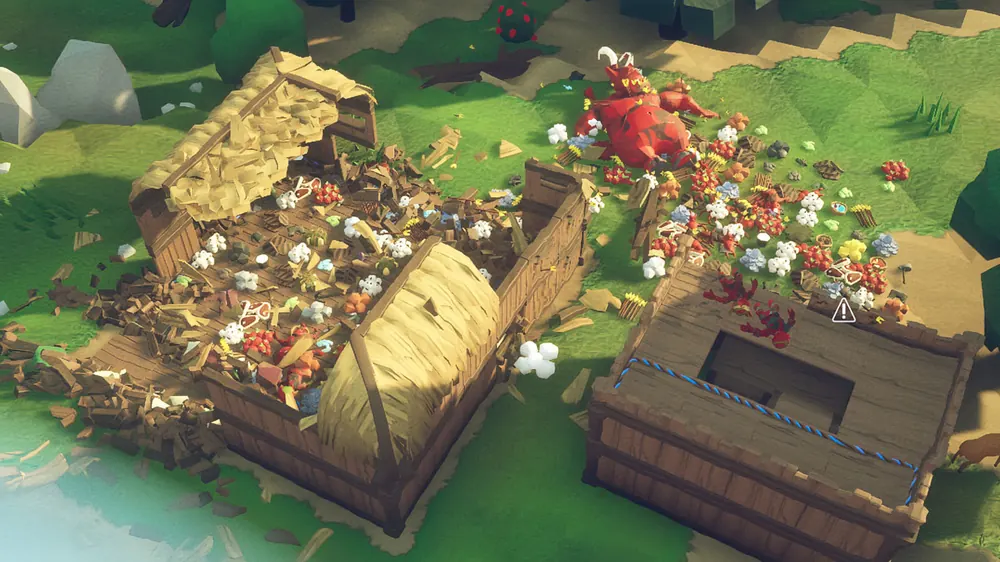
The gate house is the best defensive structure in the game, and the 1.0 notes are explicit about why: enemies prefer to attack a gate house over ordinary doors.
The pieces:
- Main Gate - 2x3.
- Drawbridge - 2x3.
- Portcullis - 2x3, and it can be shot through.
All three need Cranques, which ties defence to your crafting economy.
Design rules:
- One gate house on the main approach, not three small doors.
- A courtyard behind the gate where defenders can mass.
- Towers with line of sight over the approach.
- A portcullis you can shoot through, with archers or a mage behind it.
- A second exit for civilians, so a breach at the gate is not a trap.
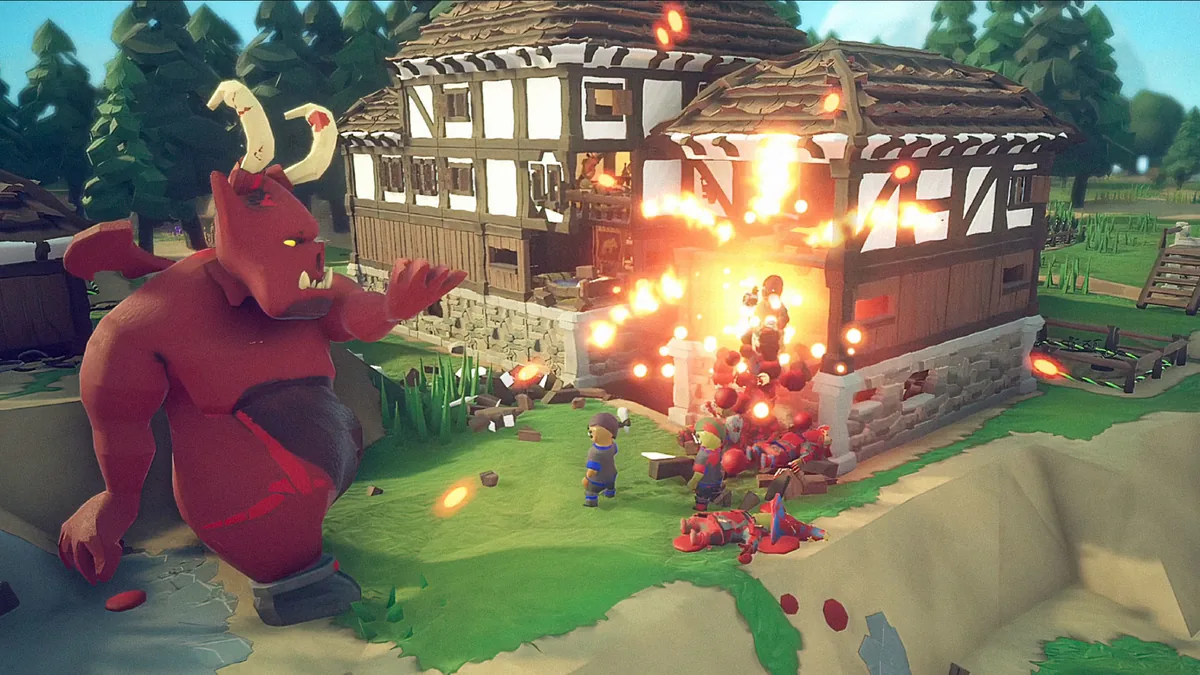
Raiders also dig terrain and bash non-door structures, so a gate house is a delay and a choke point, not an invincibility button.
Combat basics that matter
1.0 reworked melee and ranged combat:
- Parrying is easier.
- Blocking was reworked.
- Top-end melee and ranged damage was lowered.
Practical implications:
- Fights last longer, so reinforcements matter more than burst damage.
- A mage's Magic Missiles are a reliable damage source while melee holds.
- Positioning behind a portcullis is strong, because you can shoot through it.
- Numbers and morale decide fights more than individual skill.
Injuries are now a system:
- Injuries have severity.
- The Nursing skill speeds recovery.
- Major injuries require manual surgery by default.
A kingdom at war needs a nurse and a clean room for the wounded, not just more swords.
After the raid: prisoners and surrender
Combat ends with choices. In 1.0:
- Prisoners do not count toward kingdom size, so they are free labour and ransom.
- Surrendered rulers let you decide the fate of the ruler and the kingdom.
- You can install your own noble as ruler of the surrendered kingdom.
This is the moment where alignment→ becomes concrete. Executing a surrendered ruler is a reputation decision, not just a resource one. Ransom is often the better play: coin, a weaker enemy and a cleaner reputation.
Raid defence checklist
- One gate house on the main approach, with Cranques.
- Two guard shifts with an overlap at dusk.
- Patrol routes covering all approaches.
- A mage or archers behind the portcullis.
- A nurse and a clean recovery room.
- A plan for prisoners: ransom, recruit or execute.
- A decision on surrendered rulers before it happens.
Raids versus breaches
Do not confuse the two threats.
| Threat | Source | Defence |
|---|---|---|
| Raiders | Rival kingdoms, bandits | Gate house, patrols, melee line |
| Breach | Demonic Carbuncles | Portal Shields, mages, tower coverage |
Breaches climb walls and cannot be burned. The demonic carbuncle guide→ covers that fight.
Sources
Official source: Noble Fates on Steam ↗
- 1.0 patch notes ↗ for patrol routes, raid detection, gate house pieces, combat rework, injuries and surrendered rulers.
- Steam store page ↗ for enemy kingdoms and ambition systems.
- Steam Community guides ↗ for player defence layouts.
FAQ
Why didn't I get a raid warning?
Raids are no longer auto-detected in 1.0. Patrol routes detect them, and the raider path is revealed for about five minutes after detection.
Do guards get better from patrolling?
Yes. Guards earn experience in their best combat skill while on patrol.
Can enemies get through a gate house?
They can dig terrain and bash non-door structures, and a large force can break through. A gate house is a choke point, not a guarantee.
Should I execute or ransom prisoners?
Ransom is usually better: coin, a weaker enemy and a cleaner reputation. Execution is a morality decision with lasting effects on your court and neighbours.